

Most of us want to help the people we love. When someone we care about is hurting, struggling, making poor choices, or walking through a difficult season, our instinct may be to step closer, do more, solve the problem, or find a way to make things better. Sometimes that is exactly what love requires. Other times, our desire to help quietly crosses a line. We begin carrying what belongs to someone else.
That line can be difficult to recognize, especially for people who have spent much of their lives being dependable. Maybe you’re the person everyone calls when something goes wrong. Perhaps you’ve learned to anticipate other people’s needs before they voice them. You may have become accustomed to smoothing over conflict, fixing problems, making excuses, or stepping in when someone else doesn’t follow through. Helping may even feel so natural that you don’t realize how much emotional responsibility you’ve assumed until you’re exhausted, resentful, or anxious about circumstances you cannot control.
The problem isn’t that you care too much. Compassion is a beautiful expression of love. The problem comes when compassion becomes control, when support becomes rescuing, or when someone else’s choices begin determining your emotional well-being.
What Does It Mean to Take Responsibility for Someone Else’s Choices?
There is a difference between being responsible to someone and being responsible for someone.
You may be responsible to love your spouse, encourage your adult child, support a friend, care for an aging parent, or serve someone in your community. But you are not responsible for another adult’s decisions, reactions, recovery, growth, or relationship with God.
That distinction can feel uncomfortable because we often believe that if we love someone enough, we should be able to protect them from painful consequences. We may think that if we explain something one more time, give one more warning, make one more phone call, or intervene one more time, we can prevent what we fear will happen.
But another person’s life is not yours to manage.
Scripture reminds us in Galatians 6:5 that each person should carry their own load. That doesn’t contradict the instruction just a few verses earlier to “carry each other’s burdens” (Galatians 6:2). Both are true. We are called to help carry burdens that are too heavy for someone to bear alone, but we are not called to take over another person’s responsibility for their life.
That distinction is at the heart of healthy helping.

Why Is It So Hard to Stop Rescuing Someone?
If you’ve spent years anticipating problems and solving them, stepping back can feel almost irresponsible. You may experience guilt when you don’t intervene. You may worry that people will think you are selfish, uncaring, or unloving. You may even fear that something terrible will happen if you don’t remain vigilant.
Sometimes this pattern develops because being needed has become intertwined with identity. If you’ve learned that your value comes from being useful, dependable, or indispensable, allowing someone else to struggle can feel threatening. You aren’t simply watching them experience consequences. You’re also confronting an old belief that says, “If I am not fixing things, I am not doing enough.”
People pleasing can intensify this pattern. In Biblical Help for Codependency, the connection between people pleasing, perfectionism, insecurity, difficulty setting boundaries, and unhealthy relationships is explored in greater depth. When approval or peace depends on keeping everyone else happy, saying no can feel far more threatening than it actually is.
Sometimes the pattern is rooted in earlier experiences. If you grew up believing that you had to keep the peace, manage someone else’s emotions, or make things better when the adults around you were struggling, you may have learned to scan constantly for problems. You became responsible because someone had to be. Later in life, that same response can show up in relationships where you are not actually responsible for the outcome.
The behavior may look caring on the outside while being driven by fear underneath.
Helping Someone Is Not the Same as Fixing Them
Healthy support doesn’t require you to solve another person’s problem.
Think about what happens when someone you love is hurting. You might listen. You might pray with them. You might offer practical assistance. You might help them find a counselor, treatment program, physician, financial resource, or support group. You might sit beside them while they cry. You might remind them of truth when their circumstances make it difficult to remember.
All of those can be expressions of love.
But you cannot do their emotional work for them.
You cannot make someone choose recovery.
You cannot force someone to apologize.
You cannot make an adult child make wise decisions.
You cannot convince someone to accept help.
You cannot regulate another person’s emotions for them.
And you cannot guarantee that someone you love will make the choices you hope they will make.
That doesn’t mean you are powerless. It means your power lies in a different place than you may have assumed.
You can choose how you respond. You can communicate clearly. You can set boundaries. You can decide what you will participate in and what you won’t. You can seek wise counsel. You can pray. You can offer appropriate support. And you can entrust the outcome to God.
How Do You Know When Helping Has Become Unhealthy?
One clue is what happens inside you when the other person doesn’t do what you hoped.
If their decision leaves you consumed with anxiety, angry because they didn’t follow your advice, unable to sleep because you’re rehearsing possible outcomes, or convinced that you have to intervene again, you may have moved beyond support into over-responsibility.
Another sign is that your life begins revolving around the other person’s choices. You monitor their mood. You anticipate their next problem. You cancel your plans to accommodate their crises. You make excuses for them. You hide consequences from others. You repeatedly give money, time, or resources even when doing so is harming you. You begin neglecting your own physical, emotional, relational, or spiritual needs because you are so focused on keeping someone else afloat.
This is especially important for caregivers. Caring for another person can be an extraordinary expression of love, but it can also place someone at risk for chronic stress, compassion fatigue, isolation, and burnout. In Honoring Caregivers: How to Find Strength, Rest, and Renewal When You’re Pouring Out Constantly, I discuss the often-overlooked emotional cost of continually giving while your own needs remain unmet.
You were not designed to pour endlessly without being replenished.
Boundaries Don’t Mean You Stop Caring
One of the biggest misconceptions about boundaries is that they are a sign that we don’t love someone enough. Healthy boundaries actually make healthy love possible.
A boundary doesn’t say, “I don’t care what happens to you.” It says, “I care about you, and I also recognize that I am not God. I cannot control your choices, and I cannot carry what belongs to you.”
That distinction matters enormously.
You might say, “I love you, and I will help you find treatment, but I will not lie for you.”
You might say, “I want to support you, but I cannot continue having conversations when you speak to me disrespectfully.”
You might say, “I am willing to help you think through your options, but I cannot make this decision for you.”
You might say, “I will pray with you, but I cannot live your life for you.”
Those statements aren’t abandonment. They are clarity.
I’ve written more about this in How to Build God-Honoring Boundaries Without Guilt or Resentment. For many Christians, the challenge isn’t understanding that boundaries are healthy. It’s overcoming the guilt that tells us setting a boundary is somehow unloving.
It isn’t.
Sometimes the most loving thing you can do is stop shielding someone from every consequence of their choices.
What About Someone Struggling with Addiction?
This distinction becomes particularly important when someone you love is struggling with addiction.
If you have ever watched someone repeatedly make choices that harm themselves and the people around them, you know how painful it can be to stand by without taking over. You may think, “If I can just get them into treatment,” “If I can just keep them away from that person,” or “If I can just convince them to stop,” everything will change.
You may be able to help create opportunities for change. But you cannot choose recovery for someone else.
I’ve written specifically about coping with an alcoholic spouse, including the importance of boundaries and the reality that while we can support someone, we cannot carry the burden of their recovery for them. I’ve also shared 10 Promises of God When Your Child Struggles With Addiction for parents who know the particular heartbreak of watching a child struggle with substance use.
If this is your story, please hear this clearly: their addiction is not your failure.
You did not cause another adult’s addiction, and you cannot love someone enough to guarantee that they will recover.
That truth may feel painful at first. But it can also become freeing because it allows you to stop carrying a responsibility God never assigned to you.
What If Someone Keeps Making the Same Poor Choices?
This is where compassion and consequences can coexist.
We sometimes assume that if we allow someone to experience the natural consequences of their choices, we are being unloving. But consequences can provide information that rescuing prevents someone from receiving.
If you continually call an employer to explain why another adult couldn’t come to work, they don’t have to experience the consequence of their absence. If you continually pay another person’s bills after they spend irresponsibly, they don’t have to confront the consequences of their spending. If you repeatedly apologize for someone’s behavior, they don’t have to take responsibility for the hurt they’ve caused.
There are circumstances, of course, when intervention is necessary, especially when safety is at risk or when someone is unable to care for themselves. Wisdom matters. Boundaries aren’t a formula, and healthy support looks different depending on the situation.
But we should be careful not to confuse preventing discomfort with preventing harm.
Sometimes we rush in because we cannot tolerate watching someone we love struggle.
That’s something worth examining in ourselves.
What If You Feel Guilty for Stepping Back?
Guilt doesn’t necessarily mean you’ve done something wrong.
Sometimes guilt simply means you’re doing something unfamiliar.
If you’ve spent years saying yes, rescuing, accommodating, anticipating, and fixing, a healthy boundary may initially feel selfish. Your nervous system may interpret the change as dangerous because it is unfamiliar, even when the boundary itself is healthy.
That is why changing relational patterns can take time.
You may need to tolerate someone’s disappointment without immediately trying to make them feel better. You may need to allow a conversation to remain unresolved rather than rushing to restore peace. You may need to watch someone make a choice you wouldn’t make and resist the urge to intervene.
That discomfort doesn’t mean the boundary is wrong.
It may mean you’re learning a new way of relating.
And if you’ve spent years functioning on overdrive, don’t be surprised if your body and mind need time to adjust. In How to Recharge Yourself, I share more about how overcommitment, people pleasing, and a lack of healthy boundaries can eventually leave us physically, mentally, emotionally, and spiritually depleted.
Sometimes caring for others well begins with acknowledging that you cannot keep caring for them at the expense of yourself.

What Can You Actually Control?
When someone else’s choices consume your thoughts, it can help to return to a simple question:
What is mine to carry, and what belongs to them?
Your words are yours.
Your boundaries are yours.
Your choices are yours.
Your responses are yours.
Your time, energy, and attention are yours to steward.
Their choices belong to them.
Their reactions belong to them.
Their willingness to seek help belongs to them.
Their recovery belongs to them.
Their relationship with God belongs to them.
That doesn’t mean we become detached or indifferent. It means we stop confusing love with control.
There is a profound difference between saying, “I don’t care what happens to you,” and saying, “I care deeply about what happens to you, but I trust that God is the one who ultimately holds your life.”
The second is not less loving.
It may actually be a deeper form of love because it releases both people from a burden neither was meant to carry.
Let God Be God
Sometimes our attempts to fix other people reveal how desperately we want certainty.
If I can make the appointment, have the conversation, provide the money, prevent the consequence, say the right thing, or anticipate the next problem, maybe I can make sure everything turns out okay.
But we were never promised that kind of control.
God has not asked you to manage someone else’s outcomes. He has asked you to love Him, love others, walk in wisdom, obey what He has placed before you, and trust Him with what you cannot control.
That can be frightening when someone you love is making destructive choices.
But there is also freedom in it.
You can pray without panicking.
You can help without rescuing.
You can listen without fixing.
You can establish boundaries without withholding love.
You can allow consequences without wishing harm.
You can say no without becoming cruel.
You can care deeply without carrying everything.
And sometimes the most faithful thing you can do is open your hands and give back to God what you were never meant to hold.
That doesn’t mean you stop loving.
It means you stop trying to be someone’s savior.
There is only one Savior, and it isn’t you.
If you’ve spent years being the one who makes everything better, that truth may feel both uncomfortable and strangely relieving. You don’t have to prove your love by exhausting yourself. You don’t have to earn your worth by being indispensable. And you don’t have to carry another person’s choices as evidence that you care.
Love them.
Pray for them.
Help where help is appropriate.
Set the boundary when a boundary is needed.
And then trust God with the part that was never yours in the first place.
Sometimes faith looks like stepping in.
Sometimes faith looks like staying beside someone while they learn.
And sometimes faith looks like stepping back, opening your hands, and saying, “Lord, I trust You with what I cannot control.”
You can care without carrying.
You can love without rescuing.
And you can trust God without taking responsibility for what belongs to someone else.
Because when we release what was never ours to hold, we make room to carry what God actually has given us.
And there is freedom in that.
Because of Him, Hope Prevails.
Dr. Michelle
Related Resources
If this article resonated with you, these additional resources offer encouragement and practical guidance for setting healthy boundaries, supporting loved ones, and trusting God with what you cannot control.
More Resources to Help You Set Boundaries and Support Others
- How to Deal With Someone Who Hurt You Emotionally
- How to Find Hope and Healing Through a Child’s Addiction (Episode 323). Find encouragement and biblical hope when someone you love is struggling with addiction.
(If there are affiliate links in this post, meaning, if you click through and make a purchase, I may receive a commission (at no extra cost to you)).
Recommended Books for Healthy Boundaries, Faith, and Healing
Books by Dr. Michelle Bengtson
- Sacred Scars: Resting in God’s Promise That Your Past Is Not Wasted
- The Hem of His Garment: Reaching Out To God When Pain Overwhelms
More Books to Help You Set Boundaries and Release Control
- From Guilt to Grace: Hope and Healing for Christian Moms of Addicted Children by Dawn R. Ward
- Boundaries by Henry Cloud and John Townsend
- Boundaries Workbook by Henry Cloud and John Townsend
- Making Peace with What I Can’t Control by Lysa TerKeurst
- Making Peace with What I Can’t Control Bible Study Guide by Lysa TerKeurst
- Let. It. Go. by Karen Ehman
You can love someone deeply without taking responsibility for their choices. Learn how to help without rescuing, set healthy boundaries, and trust God with what you cannot control. Share on X Are you carrying burdens that were never yours to bear? Helping someone doesn't mean fixing their problems. Learn how to stop rescuing others without guilt or sacrificing your peace. Share on X
Get your Free Stress-Response Personality Assessment
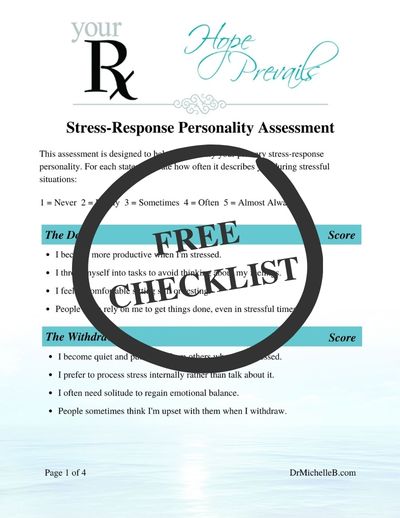
Stress rarely affects everyone the same way. Your brain, body, and emotions often respond in unique patterns shaped by your personality, past experiences, and nervous system.
This assessment will help you identify your primary stress-response personality so you can better understand how you react under pressure, recognize your stress patterns, and begin moving toward healthier, faith-filled responses.
Get the assessment here: Stress-Response Personality Assessment


