

How To Heal From Relational Wounds
by Janell Rardon
“Of course, adult life is not always so simple. Some issues need to be revisited—not dropped—and talk is essential. We need words to begin to heal betrayals, inequalities, and ruptured connections. Our need for language, conversation, and definition goes beyond the wish to put things right. Through words we come to know the other person—and to be known. This knowing is at the heart of our deepest longings for intimacy and connection with others.”
-Harriet Lerner, The Dance of Connection
I sat under my big, bright red patio umbrella.
My husband sat across from me.
An invisible wall of silence between us.
Just two hours earlier, I wrapped up my podcast conversation on healing relational wounds with Dr. Michelle. I was exhilarated and exhausted, all at the same time.
It didn’t take long for me to be tested by my own words.
“I can’t do this,” my husband finally surrendered. “I’m going to bed.”
It was 7:30ish in the evening.
“Fine,” I answered.
The Negative Voices in My Head
At that moment, I spiraled.
This shutdown spiral inside my head is very familiar.
It goes something like this:
I want out.
I can’t do this anymore.
Unbelievable.
I’d be better off alone.
And the loudest voice coming last:
The world would be better without me.
That line is always the last in my shutdown spiral.
If I could have stepped inside an MRI that magically shows what’s happening in my nervous system, I am very sure it would have shown a war between good thoughts and evil thoughts.
There was a devil on one shoulder and an angel on the other.
I tried so hard to fight through the powerful assault of negative thoughts, but I couldn’t do it.
I kept hearing my own advice, “Walk in pre-forgiveness, Janell. Walk in pre-forgiveness.”
I knew deep inside that Satan, the Father of Lies, was at work, so I kept praying the only words I could muster at that time, “God, please help me. Please help us.”
I want to tell you that the evening ended with my husband coming back outside, apologizing for his part in the confusing altercation, and us making up.
It didn’t.
Forgiveness Comes in the Morning
The morning came and with it a relational repair.
I woke up and thought, Did that really happen last night?
It did, I assured myself. Now get up, put on your big girl pants, and make this right.
We talked for a long while, applying the healing grace of the Holy Spirit to the words we couldn’t take back.
We both have childhood trauma in our rearview mirror. At times like this, it rears its ugly head and reveals yet another layer to be healed.
How Can We Heal from Relational Wounds?
In my conversation with Dr. Michelle, she asked, “What are some of the key steps or activities that people need to do to heal from these types of relational wounds?”
Even since our initial conversation, I’ve thought about this. Sometimes the greater answers come after the thought. Here are a few holistically based takeaways from my own personal and professional experiences. I like to think of them as more preventive than reparative:
1. Know Jesus Christ. Theologian Philip Yancey once wrote, “Jesus invoked a different kind of power: love, not coercion. No one who meets Jesus ever stays the same.” My husband and I are followers of Jesus. Therefore, we chose a higher standard to live by. On our wedding day, we vowed to hold each other to those standards. So, quitting isn’t an option.
It might be a very loud negative voice (or option) from the Father of Lies, but it isn’t our option. Even though we failed that Friday night, our marriage didn’t fail. There is a big difference between the two. Our individual spirituality informs our marital relationship and transforms our personalities—helping us grow together, not apart.
2. Know Yourself. Protestant Reformer, John Calvin, wrote in his classic Institutes of the Christian Religion, “Nearly all the wisdom which we possess, that is to say, true and sound wisdom, consists of two parts: the knowledge of God and of ourselves. But, while joined by many bonds, which one precedes and brings forth the other is not easy to discern.”
Almost 45 years ago, I met Jesus on my college campus. He invited me to change. Up to that point, I had “head knowledge” of who Jesus was. Years in Catholic Catechism classes taught me that. But the day I met him—really met him—my head knowledge became heart connection. From that moment on, Jesus has walked alongside me as I move closer and closer to wholeness. The only person I can change, or fix, or help is me. In my book, Stronger Every Day, I offer this relational equation for success: A Healthy Me + A Healthy You = A Very Healthy We. Not perfect humans, but healthy humans.
3. Know the Journey. This might sound odd, but the journey of life is a hard one. It involves mountaintop and valley experiences. When my husband and I said our vows, we never could have imaged what the deep dark valleys ahead. Thank goodness. But we did know God’s Word and had realistic expectations that life wasn’t always going to the honeymoon bed sprinkled with red roses. Those red roses also have big thorns.
4. Know Wise Guides, Healthy Spiritual Leaders, and Fellow Pilgrims. Sociobiologist E. O. Wilson once said, “To be kept in solitude is to be kept in pain and put on the road to madness. A person’s membership in his group—his tribe—is a large part of his identity.” Connecting with others, especially wise others, is as essential as oxygen.
Extroverts and introverts alike all have a need to connect, to belong, to share life. The New Testament has a beautiful word for this special connection between people: koinonia. Dr. Michelle spoke of a familiar axiom: hurting people hurt people. I add, healed people heal people.
5. Know the Principles of Relational Repair. Here’s where it gets highly practical: Do your own heart work. If you grew up in any childhood trauma, little “t”, middle “t”, or big “T,” do everything in your power to become a wholehearted person:
a. Become more and more aware. Awareness is the first step to transformation. Observe how you move through your life—your nonverbal and verbal ways of communicating. Keep a journal. Ask those closest to you.
b. Develop new rhythms and rituals of spiritual practice. I have found the contemplative guides of stillness, silence, and solitude as loving, self-compassionate ways to true freedom.
c. Embrace vulnerability. This requires finding safe people in safe places to practice being authentic yourself. If you need help in this area, which I certainly did, take a deep breath and ask someone to help you.
d. Let as much LIGHT in your life as possible—both natural light and spiritual light. What helps your nervous system relax? How can you calm yourself down?
e. Finally, take time to play and laugh. I call this my “joy-building” exercises. What brings you joy? As Annie Lamott says, “No is a complete sentence.” What no’s need to be voiced to make room for happy yeses?
Always remember that real change comes in making small shifts. Change can’t and won’t happen all at once. Wake up tomorrow morning and clothe yourself with strength, dignity (Proverbs 31:25) and a whole lot of self-compassion.
[If this post or the podcast episode encouraged you, consider picking up a copy of Sacred Scars: Resting in God’s Promise That Your Past Is Not Wasted ]
Discover effective strategies for healing relational wounds. Learn Janell Rardon's practical steps to repair and strengthen your connections with grace and wisdom. Share on X
Struggling with old hurts? Learn how to transform relational wounds into opportunities for healing with practical tips from Janell Rardon. Don’t miss out! Share on X
About Janell Rardon
 Author Janell Rardon is a trauma-informed, board-certified life coach specializing in family systems.
Her latest book, Stronger Every Day: 9 Tools for an Emotionally Healthy You, helps bridge the gap between faith and mental health.
Her newest title, “Grandmother,” is the greatest blessing. Visit janellrardon.com for more free resources.
Connect with Janell: Website / Facebook / Instagram / Pinterest / YouTube
Sacred Scars: Resting in God’s Promise that Your Pain is Not Wasted
Now Available!
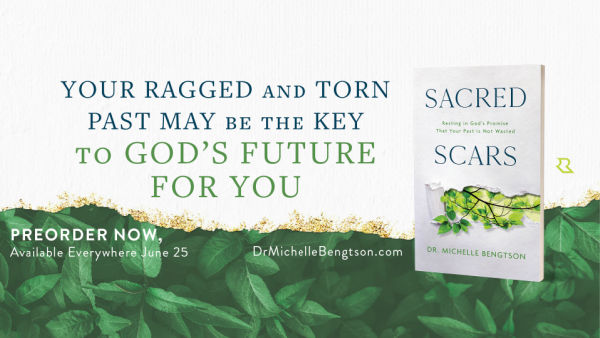
We all endure trials, pain, and hardship in this life. Too often we believe these experiences disqualify us from being useful to God. But the truth is, your past pain and brokenness serve as preparation for what God wants to do in and through you – if you will surrender to and trust him.
Just as Jesus’s scars didn’t disappear after his resurrection, our emotional or physical scars tell our story and lend credence to our testimony of God’s love and power. If you are ready to turn your past pain into present comfort and future hope, let Dr. Bengtson be your compassionate guide.
Find out more and order here: Sacred Scars


This is such a great message! So helpful and I truly enjoyed and was blessed by the podcast too. Thank you, Janell, and Dr. Michelle for sharing so transparently and freely your own struggles. I am in a grief journey after losing my hubby so I am having to learn who I am without him. It is hard but I will be OK.