

Have you ever wondered whether God is calling you to ministry, or whether what you are sensing is simply a desire you have carried for a while? Perhaps an opportunity has appeared that you cannot stop thinking about. Maybe someone has affirmed gifts in you that you had never considered using publicly. Or perhaps you have felt a persistent nudge to step into something new, but you are hesitant to call it a calling because you don’t want to get ahead of God.
Discerning God’s direction is not always as dramatic as a burning bush or as unmistakable as a voice from heaven. More often, discernment unfolds through prayer, Scripture, wise counsel, circumstances, gifts, desires, and a growing sense of obedience. Learning to recognize God’s leading requires both spiritual attentiveness and enough emotional awareness to recognize when fear, comparison, perfectionism, or other people’s expectations may be influencing what you hear.
What Does It Mean to Be Called to Ministry?
A calling to ministry does not necessarily mean becoming a pastor, missionary, or full-time church employee. Ministry can take many forms because God’s kingdom work takes place wherever His people live, work, serve, create, lead, encourage, teach, care, and love others.
Scripture describes the body of Christ as having many members with different functions and gifts. Romans 12:4-8 reminds us that we do not all have the same role, yet each person has something meaningful to contribute. Your calling may involve a platform, but it may just as readily involve a small group, a counseling room, a classroom, a workplace, a ministry of hospitality, a creative endeavor, or the quiet influence you have on the people God has placed around you.
That distinction matters because we can easily confuse calling with visibility. We may look at someone else’s ministry and assume that because their work is public, their calling must be more significant. But God is not asking you to reproduce someone else’s assignment. I have written before about your purpose and your calling, including how our individual gifts and roles contribute to the larger body of Christ. Your calling is not a competition.
How Can You Know If God Is Calling You to Ministry?
One of the most important things to understand about discernment is that you may not receive certainty all at once. Sometimes God gives enough light for the next step without illuminating the entire path.
That can be difficult for those of us who prefer certainty before action. When the stakes feel high, our minds naturally want to predict every possible outcome before we move. Fear of failure, perfectionism, past disappointments, and the desire to make the “right” decision can all make discernment feel more complicated than it needs to be. I’ve explored some of these dynamics in The Neuroscience of Indecision: Why We Feel Stuck and How to Move Forward, because sometimes what feels like a spiritual problem is also being influenced by the way our brains respond to uncertainty.
So how can you discern whether God may be calling you to ministry?
Look for alignment with Scripture
God’s direction will never require you to violate God’s Word. That may sound obvious, but when an opportunity feels exciting, validating, or overdue, it can be tempting to focus so heavily on what we want that we overlook whether the direction is consistent with Scripture.
Prayerful discernment begins by grounding ourselves in what God has already revealed. We don’t need to ask God to contradict His character in order to give us a new assignment. We can ask Him to help us recognize how His Word applies to the particular season and decision in front of us.
Pay attention to persistent desires, not passing impulses
A calling may begin with a desire, but not every desire is a calling.
There is a difference between a fleeting impulse and a persistent burden that continues to surface over time. You may find yourself repeatedly drawn toward a particular population, problem, form of service, or message. You may notice that certain needs consistently move your heart or that particular gifts seem to emerge naturally when you serve others.
That doesn’t mean every persistent desire automatically comes from God. Our desires can be influenced by many things. But neither should we dismiss them simply because they don’t arrive with absolute certainty. Sometimes paying attention is part of discernment.
Consider the gifts God has already given you
God does not call us without equipping us.
That doesn’t mean we will feel qualified. Moses certainly didn’t. He immediately offered reasons why he wasn’t the right person for the assignment. Scripture is filled with people who felt inadequate, afraid, or unprepared when God called them.
But there is a difference between feeling inadequate and having no evidence of gifting.
Look at the places where others consistently experience encouragement, wisdom, compassion, leadership, teaching, creativity, hospitality, discernment, or strength through you. Ask trusted people who know you well what they see in you. Sometimes other people recognize gifts we have minimized because those gifts feel ordinary to us.

What If Fear Makes You Question God’s Calling?
Fear does not automatically mean God is telling you no.
Sometimes fear simply means something matters.
When we are stepping beyond what is familiar, our brains can interpret uncertainty as potential threat. That can activate protective responses designed to keep us safe. If you have experienced rejection, failure, criticism, trauma, or disappointment in the past, a new opportunity may activate old protective patterns even when the present situation is not dangerous.
That is one reason discernment requires more than asking, “Am I afraid?” A better question may be, “What is my fear telling me, and is it telling me the truth?”
There is an important distinction between wise caution and fear-based avoidance. Fear may tell you that you are incapable, that everyone will reject you, that you have to get everything perfect before you begin, or that one mistake will ruin everything. Those messages deserve examination rather than automatic obedience.
I’ve written about this in Why Do I Still Feel Afraid When I Know I’m Safe? Understanding the Brain’s Fear Response. Understanding how a fear response works can help us stop interpreting every uncomfortable feeling as divine direction.
God can lead us through peace, but peace does not always mean the absence of nervousness. Sometimes obedience feels uncomfortable precisely because it asks us to move beyond what we have previously known.
How Do You Discern God’s Will Without Overthinking Everything?
Discernment becomes difficult when we demand certainty before we are willing to obey.
We can pray, research, analyze, seek counsel, make lists, revisit the decision, ask for another sign, and then repeat the process because we are afraid of getting it wrong. At some point, what began as wise discernment can become a way of postponing action.
That doesn’t mean we should rush spiritual decisions. It means there is a difference between seeking wisdom and seeking guarantees.
God has not promised that we will always know every outcome before we take a step. Proverbs 3:5-6 calls us to trust in the Lord rather than relying on our own understanding. James 1:5 reminds us that when we lack wisdom, we can ask God for it, and He will be faithful to provide it.
Sometimes the next faithful step is simply the next faithful step. You may not need to know how the entire ministry will unfold. You may need to make the phone call, have the conversation, attend the training, submit the proposal, volunteer for the opportunity, or begin using the gift that has already been placed in your hands.
Seek Wise Counsel Before You Step Out
God often uses other people to help us discern what we cannot see clearly on our own.
Find people who know you well, know Scripture, and have enough emotional maturity to tell you the truth rather than simply telling you what you want to hear. Ask them what they see in your gifts, character, motivations, and readiness.
Wise counsel can also help us distinguish between calling and compensation. Sometimes we are drawn toward a ministry opportunity because it promises affirmation, significance, belonging, or an escape from something painful. Those desires do not make us bad, but they are worth examining.
A healthy calling does not require us to prove our worth.
God’s invitation is not, “Do this so you can finally matter.” In Christ, your worth was settled before you ever accomplished anything for Him.

What If You Feel Called but Don’t Feel Qualified?
Oh my friend, you may never feel completely qualified. I didn’t feel qualified to pursue neuropsychology as my career in a male-dominated field, or qualified to be an author, or speaker, or podcast host, or even a mother (maybe especially a mother)!
That is not necessarily evidence that you are outside God’s will.
There is something humbling about recognizing that if God is truly asking us to do something, we will need Him. Our inadequacy can become an invitation to dependence rather than a reason to disqualify ourselves.
This is one reason I appreciate the story of Moses. God did not wait until Moses felt confident enough to accept the assignment. Moses had plenty of objections. God met him in his reluctance and provided what he needed for obedience.
The goal isn’t to become fearless enough that you no longer need God. The goal is to become willing enough to trust Him while you still recognize your need for Him.
That is very different from reckless confidence.
Calling Is About Obedience, Not Visibility
One of the greatest traps in discerning ministry is comparing our assignment with someone else’s.
We see another person’s platform, influence, book, ministry, speaking schedule, or apparent effectiveness, and we wonder why God hasn’t given us the same opportunity. But comparison can quietly turn calling into competition.
You do not have to build the ministry God gave someone else.
You do not have to prove that your calling is legitimate by making it look impressive.
You do not have to measure your obedience by someone else’s reach.
God may ask one person to speak to thousands and another to faithfully walk alongside one hurting person. Both can be acts of profound obedience.
I have seen this tension before in my own journey. In The Birth of a Dream, I wrote about what it felt like to recognize that writing was something God had called me to do and how overwhelming it could feel to take the next step when I didn’t know how everything would unfold. Calling did not eliminate uncertainty. It gave uncertainty somewhere to go: into the hands of God.
What If You’re Still Not Sure?
If you’re still wondering whether God is calling you to ministry, you don’t have to force an answer today.
Pray. Pay attention. Study Scripture. Look honestly at your gifts and motivations. Seek wise counsel. Notice what continues to draw your heart. And then ask God for courage to take the next step when He makes that step clear.
You might also ask yourself a few simple questions: What need consistently moves my heart? Where do others see evidence of gifting in me? What opportunities keep appearing? What am I resisting because I genuinely sense God is saying no, and what am I resisting simply because I’m afraid? If I knew I could not fail, what would I be willing to explore?
Those questions aren’t a formula for determining God’s will. They are invitations to slow down enough to notice what may already be unfolding.
And remember, God’s calling is not a test you can accidentally fail by making one imperfect decision. He is not waiting for you to decipher a hidden code correctly before He will guide you. He knows your limitations, your history, your fears, your gifts, and your desires. He knows you completely, and He is not intimidated by your uncertainty.
If you sense God drawing you toward something new, you don’t have to manufacture courage before you begin. You can bring your questions, your trembling, your excitement, and even your doubts with you. Sometimes faith looks less like certainty and more like saying, “Lord, I don’t know exactly where this leads, but I’m willing to take the next step with You.”
You may not have the whole picture yet. You may not feel ready. You may still wonder whether you heard God correctly.
That’s okay.
You don’t have to know everything to obey the next thing.
And if God is the One leading you, you won’t have to become someone else to fulfill what He has asked of you. You simply have to remain close to Him, keep listening, and trust that the One who called you will also equip you.
You don’t have to rush. You don’t have to compare. You don’t have to prove yourself.
Just take the next faithful step.
Because of Him, #HopePrevails!
Dr. Michelle
Additional Resources for Discerning Your Call to Ministry
If you sense God calling you to ministry but aren’t sure where to begin, these two books offer helpful guidance and encouragement as you seek His direction.
Start Little, Dream Big: Grow the Ministry You Were Born to Build by Linette Rainville offers encouragement for taking small, faithful steps toward the ministry God has placed on your heart.
Discerning Your Call to Ministry: How to Know for Sure and What to Do About It by Jason K. Allen provides biblical guidance for evaluating a call to ministry and determining what to do next.
Is God calling you to ministry, or is fear making you question His direction? Learn how to recognize God's leading, overcome uncertainty, and take the next faithful step. Share on X You don't have to feel qualified to answer God's calling. Discover how prayer, Scripture, and wise counsel can help you discern God's will without overthinking every decision. Share on X
Get your Free Stress-Response Personality Assessment
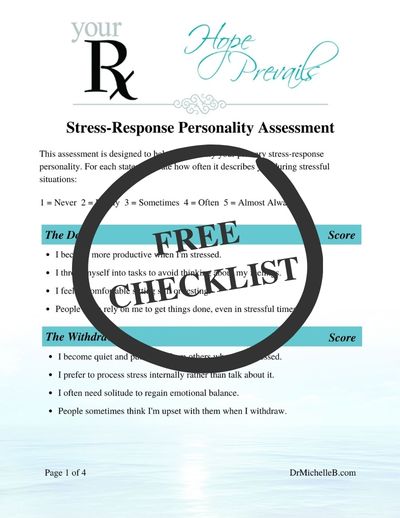
Stress rarely affects everyone the same way. Your brain, body, and emotions often respond in unique patterns shaped by your personality, past experiences, and nervous system.
This assessment will help you identify your primary stress-response personality so you can better understand how you react under pressure, recognize your stress patterns, and begin moving toward healthier, faith-filled responses.
Get the assessment here: Stress-Response Personality Assessment


