
If you feel exhausted even when you’ve technically had enough sleep, your nervous system may be carrying a burden your body has not yet had the opportunity to release.
Many people assume nervous system regulation is something that happens naturally when life becomes less stressful. Yet the nervous system does not automatically return to a state of calm simply because a difficult season has ended. The body often continues responding as though danger remains present long after the threat has passed.
This is why nervous system regulation is less about finding one perfect solution and more about cultivating daily habits that communicate safety to the brain and body. Small, consistent practices can gradually shift the nervous system away from chronic survival mode and toward greater resilience, emotional stability, and peace.
What Is Nervous System Regulation and Why Does It Matter?
Nervous system regulation refers to the body’s ability to adapt to stress while maintaining emotional, mental, and physical balance. A regulated nervous system can respond appropriately to challenges and then return to a state of rest once the challenge has passed.
When the nervous system becomes dysregulated, the brain may remain stuck in patterns of hypervigilance, anxiety, irritability, emotional overwhelm, exhaustion, or shutdown. Stress hormones remain elevated, sleep becomes disrupted, and even ordinary responsibilities can feel overwhelming.
The goal is not to eliminate stress. Human beings were designed to respond to stress when necessary. The goal is to increase the nervous system’s flexibility so that moments of stress do not become a permanent physiological state.
This understanding aligns with what many people discover while learning to identify the difference between everyday pressure and a brain that remains trapped in a persistent state of alarm.
How Does the Brain Respond to Chronic Stress?
The brain continuously scans the environment for signs of safety or danger. When danger is perceived, the amygdala activates protective responses, while stress hormones prepare the body for action.
This response is remarkably effective during genuine threats. The challenge arises when the brain begins interpreting ordinary experiences—an unanswered text, a difficult conversation, financial concerns, or lingering emotional wounds—as ongoing threats.
Over time, chronic stress can weaken the brain’s ability to distinguish between present reality and past experiences. The nervous system remains activated even when no immediate danger exists.
This is one reason why practices that strengthen emotional awareness and renew thought patterns can be so valuable. Learning to recognize the connection between stress, thoughts, and physiological responses helps create opportunities for healing.
What Daily Habits Support Nervous System Regulation?
The most effective habits are often surprisingly simple. Rather than forcing the body into calmness, these practices create conditions that allow regulation to emerge naturally.
Prioritize Consistent Sleep Rhythms
Sleep is one of the most powerful tools for nervous system health. During sleep, the brain processes emotional experiences, regulates stress hormones, and restores cognitive functioning.
A consistent sleep schedule often supports regulation more effectively than simply increasing sleep duration.
Helpful practices include:
- Going to bed and waking up at consistent times
- Reducing screen exposure before bedtime
- Limiting stimulating activities late in the evening
- Creating a calming nighttime routine
When sleep becomes irregular, the nervous system frequently interprets the inconsistency as an additional stressor.
Engage in Gentle, Rhythmic Movement
Movement communicates safety to the brain in ways that words cannot.
Walking, stretching, swimming, cycling, and other rhythmic forms of exercise help discharge accumulated stress while supporting healthy nervous system functioning. These activities encourage communication between the brain and body and can reduce excessive activation of stress pathways.
The goal is not intense performance but steady regulation.
Practice Intentional Breathing
Breathing patterns directly influence the autonomic nervous system.
Slow, controlled breathing activates pathways associated with rest, restoration, and emotional regulation. Even a few minutes of intentional breathing throughout the day can help interrupt escalating stress responses.
Breathing practices become particularly effective when paired with mindfulness, prayer, or moments of quiet reflection.
Spend Time in God’s Creation
Research consistently demonstrates that time in nature supports emotional well-being and reduces physiological markers of stress.
A walk through a park, sitting beside a lake, or simply spending time outdoors provides sensory experiences that help calm an overstimulated nervous system.
Creation often invites a slower pace, redirecting attention away from constant demands and back toward God’s sustaining presence.
How Does Scripture Support Nervous System Regulation?
The Bible frequently addresses the realities of fear, anxiety, and emotional distress—not by denying them, but by redirecting attention toward God’s character.
Throughout Scripture, God’s people are repeatedly invited to remember, trust, wait, and rest.
Psalm 46:10 says, “Be still, and know that I am God.”
Stillness is not merely a spiritual discipline. It is also a physiological invitation. Moments of quiet trust can interrupt cycles of fear and remind the brain that it is not responsible for carrying burdens that belong to God.
Similarly, Jesus’ invitation in Matthew 11:28-29 offers both spiritual and emotional restoration:
“Come to me, all you who are weary and burdened, and I will give you rest.”
Rest is not weakness. It is part of God’s design for human flourishing.
For many people, combining prayer with practices that support emotional resilience creates a powerful foundation for long-term healing.

Why Are Relationships Important for Nervous System Health?
Human beings were created for connection.
The nervous system regulates most effectively within safe, trustworthy relationships. Healthy relationships provide emotional co-regulation, helping the brain interpret experiences through the lens of safety rather than threat.
Meaningful connection may include:
• Honest conversations with trusted friends
• Participation in a supportive faith community
• Counseling relationships that foster growth
• Family relationships characterized by emotional safety
Isolation often amplifies nervous system dysregulation, while connection can help restore balance.
This is especially important for those who have experienced prolonged stress, grief, trauma, or loneliness.
How Can You Build Sustainable Nervous System Regulation Habits?
The nervous system changes gradually. Lasting regulation is rarely the result of a dramatic breakthrough. More often, it develops through small, faithful habits repeated consistently over time.
Choose one or two practices rather than attempting a complete lifestyle overhaul. Consistency matters more than intensity.
A five-minute walk may be more transformative than an ambitious fitness plan that lasts one week. A brief daily prayer may create more lasting change than occasional attempts at spiritual renewal during moments of crisis.
The nervous system learns through repetition. As healthy patterns become familiar, the brain increasingly recognizes safety, flexibility, and rest as its new normal.
God designed the brain and body with remarkable capacity for healing. While life’s challenges may not disappear, habits that support nervous system regulation can help create the conditions where peace, resilience, and hope take deeper root.
Cheering You On,
Dr. Michelle
Getting enough sleep but still exhausted? Your nervous system may still be responding as though danger is present. Learn which daily habits can help your brain and body move toward greater calm, resilience, and peace. Share on X Your nervous system learns through repetition. Small daily habits can help communicate safety to your brain and body. Learn practical ways to support nervous system regulation and move away from chronic survival mode. Share on X
Get your Free Stress-Response Personality Assessment
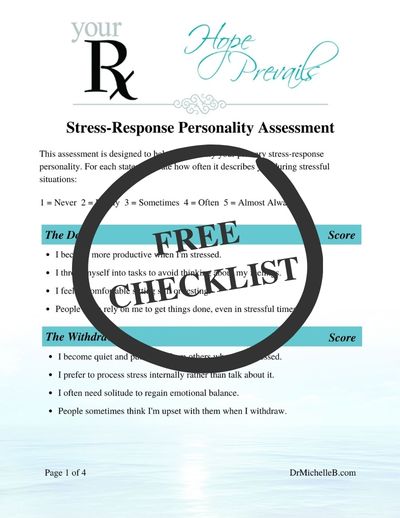
Stress rarely affects everyone the same way. Your brain, body, and emotions often respond in unique patterns shaped by your personality, past experiences, and nervous system.
This assessment will help you identify your primary stress-response personality so you can better understand how you react under pressure, recognize your stress patterns, and begin moving toward healthier, faith-filled responses.
Get the assessment here: Stress-Response Personality Assessment


So good, Dr. Michelle! Thank you for sharing your expertise and compassion help.
Hoping it encouraged you, Janet. We’re all a work in progress. Grateful God doesn’t give up on us!
Hope Prevails,
Dr. Michelle