

It flew out of my mouth quick, unfiltered, cutting, and harsh. Not a moment passed before I saw the expression on his face: confused and hurt. The problem wasn’t the topic we were discussing, but the unnecessary harsh tone I used to my husband, my companion, and friend that I couldn’t take back. It not only cut him deeply but it halted any opportunity of the conversation being a productive one that could lead to resolution.
There is no redeeming value in harshness.
It has never healed a wounded heart.
It has never strengthened a fragile mind.
It has never produced the lasting transformation we hope it will.
And yet, modern culture often treats harshness as wisdom. As strength. As honesty.
People say things like:
- “I’m just telling it like it is.”
- “They need tough love.”
- “Sometimes people just need to hear the truth.”
But Scripture paints a very different picture of emotional and spiritual maturity.
“Gentle words are a tree of life” (Proverbs 15:4).
“A gentle answer turns away wrath” (Proverbs 15:1).
“Let your gentleness be evident to all” (Philippians 4:5).
Notice what Scripture does not say. It never equates harshness with godliness. It never presents cruelty as a fruit of spiritual maturity. It never suggests that humiliation is an effective path toward healing or transformation.
In a world increasingly shaped by outrage, contempt, and reactive communication, many people have forgotten the profound difference between truth and harshness.
And the distinction matters deeply: for our relationships, our emotional health, and even the way the brain processes change.

Why Harshness Does Not Help People Change
From a neuroscience perspective, harshness activates threat responses in the brain far more quickly than it produces insight or transformation.
The nervous system interprets contempt, verbal aggression, criticism, and hostile tones as danger. When that happens, the brain shifts into survival mode, often referred to as fight, flight, freeze, or fawn.
Once the brain perceives threat, higher-level reasoning becomes significantly impaired. This is one reason emotionally charged conversations often escalate instead of resolve.
When someone feels emotionally unsafe, it becomes far more difficult to:
- process information clearly
- regulate emotions
- problem solve effectively
- remain open to feedback
- learn new behaviors
- stay connected relationally
Harshness may create short-term compliance rooted in fear, but fear is rarely a sustainable catalyst for heart-level transformation.
Repeated exposure to harsh communication can strengthen neural pathways associated with:
- shame
- hypervigilance
- anxiety
- defensiveness
- emotional withdrawal
- chronic self-criticism
This dynamic appears everywhere:
- in marriages
- in parenting
- in friendships
- in church environments
- in leadership
- in work settings
- even in our internal dialogue
This is particularly important when considering the connection between emotional safety and healing. Much like the principles behind renewing unhealthy thought patterns through truth and grace, the brain changes most effectively in environments that combine honesty with compassion.
What Does the Bible Say About Harshness?
Scripture consistently elevates gentleness—not cruelty—as evidence of wisdom and maturity.
Gentleness is often misunderstood because many people confuse it with weakness, passivity, or lack of boundaries. Biblically, however, gentleness is strength under control.
Jesus embodied this perfectly.
He never minimized truth. He confronted hypocrisy. He corrected harmful behavior. He addressed sin directly.
But He did not weaponize truth.
He corrected without humiliating.
He convicted without crushing.
He confronted without contempt.
This distinction is essential because truth and harshness are not the same thing.
Truth says:
“This behavior needs to change.”
Harshness says:
“There is something fundamentally wrong with you.”
Truth invites repentance.
Harshness provokes defensiveness.
Truth preserves dignity.
Harshness often produces shame.
And shame is a deeply ineffective and unhealthy long-term motivator.
While conviction can draw a person toward restoration, shame frequently drives people into hiding, isolation, and self-protection. This is one reason emotionally healthy relationships require learning how to communicate with both honesty and emotional safety rather than using fear, intimidation, or contempt as motivators.
Why Some People Confuse Harshness with Strength
Many people learned early in life that harshness was normal.
Perhaps love was communicated through criticism.
Perhaps correction came through humiliation.
Perhaps anger and control were mistaken for authority.
Over time, harshness can begin to feel familiar—even necessary.
Some people fear that if they become softer, gentler, or more compassionate, they will lose influence or effectiveness. They worry gentleness will weaken their leadership, parenting, or boundaries.
But gentleness is not weakness.
Healthy boundaries can coexist with compassion.
Direct communication can coexist with dignity.
Truth can coexist with tenderness.
In fact, research on relational health repeatedly demonstrates that people change best in environments marked by:
- safety
- connection
- consistency
- compassion
- emotional regulation
- truth communicated with care
This aligns beautifully with the biblical model of speaking “the truth in love” (Ephesians 4:15).
Love does not eliminate truth.
Truth does not require cruelty.
These realities were never meant to compete with one another.
Harsh Self-Talk Is Harmful Too
Sometimes the harshest voice in our lives is not someone else’s.
It is our own.
Many people speak to themselves with a level of contempt they would never use toward another human being. Internal dialogue becomes saturated with criticism, condemnation, perfectionism, and shame.
But self-condemnation does not produce healing either.
The brain responds to internal hostility much like it responds to external hostility. Chronic self-criticism can reinforce stress responses, increase anxiety, deepen hopelessness, and strengthen negative neural pathways over time.
This is one reason practices rooted in replacing destructive inner dialogue with God’s truth are so important for emotional and spiritual healing.
There is a meaningful difference between conviction and condemnation.
Conviction identifies what needs attention while still leaving room for hope.
Condemnation attacks identity and leaves a person buried in shame.
Scripture tells us that “there is now no condemnation for those who are in Christ Jesus” (Romans 8:1).
God corrects without cruelty.
He convicts without contempt.
He restores without humiliation.
How to Speak Truth Without Being Harsh
Rejecting harshness does not mean avoiding difficult conversations.
It does not mean tolerating abuse.
It does not mean abandoning discernment.
It does not mean eliminating accountability or boundaries.
It simply means recognizing that cruelty has no redeeming value.
You can:
• be honest without being harsh
• hold boundaries without hostility
• correct behavior without demeaning character
• speak directly without stripping someone of dignity
Gentleness does not dilute truth.
It changes how truth is delivered.
And delivery matters more than many people realize.
People rarely bloom where they are continually bruised.
The tone of our words can either calm the nervous system enough for growth—or intensify fear, shame, and defensiveness.
This is especially important in close relationships, where repeated harshness slowly erodes emotional safety over time. Healthy connection requires creating relationships where emotional trust and vulnerability can grow safely rather than environments ruled by fear or criticism.
There Is No Redeeming Value in Harshness or Cruelty
Culture may continue glorifying harshness as authenticity, strength, or “telling it like it is.”
But neither Scripture nor neuroscience supports that view.
Cruelty does not heal.
Contempt does not transform.
Humiliation does not restore.
Gentleness is not weakness.
It is wisdom restrained by love.
And perhaps one of the greatest signs of maturity is learning how to speak truth in ways that preserve dignity while still inviting growth.
Because there has never been a redeeming value in harshness.
Hope Prevails,
Dr. Michelle
(If there are affiliate links in this post, meaning, if you click through and make a purchase, I may receive a commission (at no extra cost to you)).
Resources:
- Stronger Every Day: 9 Tools for an Emotionally Healthy You by Janell Rardon
- Anger Management, Jesus Style by Kathy Collard Miller
- Taking Out Your Emotional Trash: Face Your Feelings and Build Healthy Relationships by Georgia Shaffer
- Avoiding the 12 Relationship Mistakes Women Make by Georgia Shaffer
- Healthy Conflict, Peaceful Life: A Biblical Guide for Communicating Thoughts, Feelings, and Opinions with Grace, Truth, and Zero Regrets By Donna Jones
- The Responsive Marriage: Finding the Path Out of Reactivity by Dr. Donald W. Welch, Ph.D., LMFT
- Marriages in the Bible: What Do They Tell Us? By Gary H. Lovejoy, Ph.D.
- How to Listen So People Will Talk by Becky Harling
- How to Listen So Your Kids Will Talk by Becky Harling
- Reframing Rejection: How Looking Through a Different Lens Changes Everything By Jessica Van Roeke
- 7 Deadly Friendships: How to Heal When Painful Relationships Eat Away at Your Joy by Mary DeMuth
- Spouse in the House: Rearranging Our Attitudes to Make Room for Each Other by Cynthia Ruchti and Becky Melby
- The Power of Connection: Maximize Your Health and Happiness with Close Relationships by Gregory L. Jantz, Ph.D.
Harshness may create fear, but it rarely creates lasting change. Scripture and neuroscience both reveal why gentleness leads to healthier relationships and growth. Share on X Some wounds are caused less by what was said and more by how it was said. There is no redeeming value in harshness, especially in the relationships that matter most. Share on X
Get your Free Stress-Response Personality Assessment
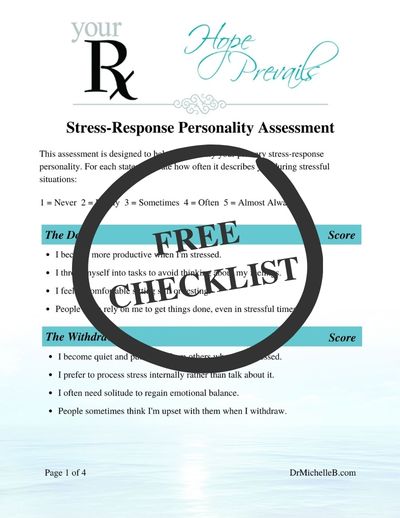
Stress rarely affects everyone the same way. Your brain, body, and emotions often respond in unique patterns shaped by your personality, past experiences, and nervous system.
This assessment will help you identify your primary stress-response personality so you can better understand how you react under pressure, recognize your stress patterns, and begin moving toward healthier, faith-filled responses.
Get the assessment here: Stress-Response Personality Assessment


