
Trauma has a way of changing how we experience the world long after the event itself has passed. Sounds feel louder. Relationships feel riskier. Rest feels elusive. Even moments that should feel peaceful can carry an undercurrent of unease. Many people quietly wonder why life does not return to normal once the danger is over. Others question their faith wondering why trusting God has not silenced their symptoms. For many, trauma recovery feels far slower and more confusing than they expected.
What if the problem is not that healing is failing but that we misunderstand what healing actually looks like?
One of the most important shifts trauma survivors can make is moving from self-judgment to self-understanding. A common misunderstanding is that people think trauma is what happened to them. In actuality, a stressor is what happened but trauma is our body’s response to the stressor.
Trauma does not simply live in memory. It reshapes patterns of attention, expectation and bodily response. The brain learns through experience and trauma teaches the brain that vigilance equals survival. That lesson does not disappear simply because time has passed, or faith has grown.

Understanding Trauma Recovery
This is why trauma recovery requires more than insight alone. Healing involves helping the nervous system relearn safety not just intellectually but experientially. It is also why progress often feels slow and nonlinear. The brain heals through repetition relationship and regulation not through pressure or perfection.
From a clinical perspective one of the most hopeful truths about trauma is this: The brain remains capable of change throughout the lifespan. Neuroplasticity means that new patterns can form even after profound disruption. From a biblical perspective this aligns beautifully with the promise of renewal. God specializes in restoration that unfolds over time not transformation that demands instant results.
One way healing begins is through the rebuilding of trust. Trauma fractures trust in others, in oneself, and often in God. Rebuilding trust does not start with forcing belief. It starts with creating safety. Safety in relationships. Safety in routines. Safety in the body.
Simple practices can support this process. Grounding exercises that bring awareness to the present moment help signal to the nervous system that danger has passed. Gentle movement can restore a sense of agency and connection. Predictable rhythms such as consistent sleep wake times or daily prayer rituals create stability for a system that once lived in chaos.
Spiritually this may look different than expected. Trauma survivors often struggle with concentration during prayer or feel disconnected during worship. Rather than interpreting this as spiritual failure it may be helpful to see it as the nervous system asking for gentleness. God is not offended by distracted prayers or wordless sighs. Scripture reminds us that He understands the groans of the heart even when language fails.
Another aspect of healing that deserves attention is grief. Trauma recovery often includes grieving losses that others may not see. Loss of innocence. Loss of safety. Loss of the version of life that once felt possible. Grief is not a detour from healing. It is part of it.
God invites honesty in grief. The Psalms are filled with raw lament not because God requires suffering but because He welcomes truth. Lament creates space for integration. It allows pain to be acknowledged rather than buried where it quietly shapes behavior and belief.
Healing also involves learning to relate to triggers with curiosity rather than fear. A trigger is not evidence of weakness. It is information. It points to areas where the nervous system learned to associate certain cues with threat. Over time and with support triggers can become opportunities for awareness and compassion rather than shame.
Support matters. Trauma was not meant to be healed in isolation. Safe relationships are one of the most powerful agents of recovery. This includes professional support when needed. Therapy does not replace faith. It often creates the stability necessary for spiritual growth to deepen.

The Importance of Moving Forward After Trauma
It is also important to remember that healing does not require revisiting every detail of the trauma. Healing is about increasing present day capacity not reliving past pain. Progress is measured not by how much you remember but by how fully you are able to live now.
For some healing includes medication for a season. This is not a spiritual shortcut. It can be a stabilizing support that allows other forms of healing to take root. God uses many tools and none of them diminish His power.
Perhaps the most freeing truth for trauma survivors is this:
- You are not behind.
- You are not doing healing wrong.
- You are responding to what you endured in the way your system learned to survive.
God does not rush recovery. He is not measuring your progress against someone else’s timeline. He meets you where you are not where you think you should be.
Your Hope-Filled Perspective
Scripture tells us that God restores the soul. Restoration implies care patience and intention. It suggests repair not replacement. Your story matters. Your wounds matter. And your healing matters to God.
If you are in the aftermath of trauma, may you offer yourself the same compassion God extends to you. Healing is not about becoming who you were before. It is about becoming who you are now with greater safety strength and hope.
And even when the process feels slow, you are not alone. The God who sees the whole story is still at work gently, faithfully, and purposefully within you.
For more information, please tune in to the recent episode of Your Hope-Filled Perspective where I discussed Understanding PTSD: What it Is, What It Isn’t, and How God Meets Us in the Aftermath of Trauma.
Hope Prevails,
Dr. Michelle
The danger is over. So why does your nervous system still feel unsafe? Trauma recovery is often slower and more complex than expected. Understanding why can change everything. Share on X What if you're not healing wrong? Trauma recovery isn't about getting over it. Learn why healing takes time and how God meets us in the process. Share on X
Additional Trauma Recovery Resources:
(If there are affiliate links in this post, meaning, if you click through and make a purchase, I may receive a commission (at no extra cost to you)).
Sacred Scars: Resting in God’s Promise That Your Past Is Not Wasted by Dr. Michelle Bengtson
The Hem of His Garment: Reaching Out To God When Pain Overwhelms by Dr. Michelle Bengtson
Stronger Every Day: 9 Tools for an Emotionally Healthy You by Janell Rardon
3 Things You Need to Know About Unhealed Childhood Trauma
Soul Wounds: 4 Steps Toward Healing from the Wounds of Abuse and Trauma
Your Hope Filled Perspective Podcast episode 166: Healing from Abuse and Trauma to Walk in the Fullness of Who God Created You to Be
Get your Free Stress-Response Personality Assessment
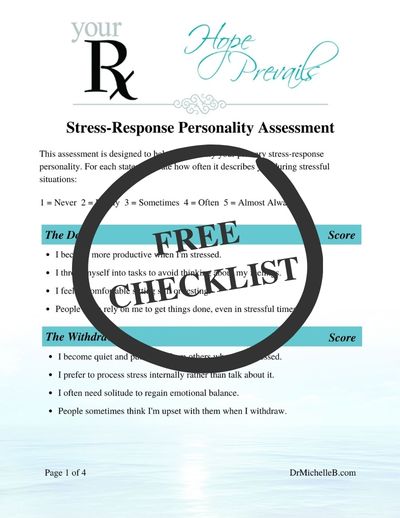
Stress rarely affects everyone the same way. Your brain, body, and emotions often respond in unique patterns shaped by your personality, past experiences, and nervous system.
This assessment will help you identify your primary stress-response personality so you can better understand how you react under pressure, recognize your stress patterns, and begin moving toward healthier, faith-filled responses.
Get the assessment here: Stress-Response Personality Assessment


So good. So helpful. Thank you, Michelle.
Thank you, Janet. I’m so glad to hear it! Hope Prevails!
Thank you. I needed this even today. Have been good then today suddenly I got triggered. 🙏🏾
Char,
I’m so glad it arrived in your inbox at a time you needed it. We serve a good God!
Hope Prevails!