

Have you ever found yourself thinking, I know I need to let this go, but I don’t know how?
Maybe years have passed since the conversation, the betrayal, the disappointment, or the loss. You’ve prayed about it. You’ve talked about it. You may have even forgiven the person involved. You may feel as though you’ve moved forward, and yet, every now and then, something happens that brings the old emotion rushing back. A song, a date on the calendar, a familiar voice, or a situation that reminds you of what happened can suddenly transport you emotionally to a place you thought you had left behind.
Then you wonder, Why am I still affected by this?
If you’ve already decided to move forward, why does your brain keep taking you back?
The answer isn’t necessarily that you’re unwilling to let go. Sometimes your brain is doing exactly what it was designed to do.
Your Brain Pays Attention to What Matters
Your brain is constantly sorting through an enormous amount of information. It can’t consciously process everything you see, hear, feel, and experience, so it prioritizes what seems important. Experiences associated with strong emotion, threat, reward, surprise, or personal significance tend to receive more attention, which can make them more memorable and more readily retrieved later.
That helps explain why you may remember certain moments with remarkable clarity while having no idea what you ate for lunch three days ago. Your brain doesn’t treat every experience equally.
When an experience involves something your brain considers essential, such as your physical safety, your relationships, your identity, your sense of belonging, or your expectations for the future, it can carry a particularly strong emotional charge. A betrayal isn’t simply an event. It can change your perception of whether people are trustworthy. Rejection isn’t simply a disappointing conversation. It can affect what you believe about your worth and belonging. A traumatic experience isn’t simply something that happened in the past. It can alter your brain’s expectations about whether the world is safe.
That’s one reason emotional pain can be so persistent. Emotional pain isn’t imaginary or something we should simply be able to think our way out of. It involves genuine psychological and biological processes, and painful emotions can become closely connected with memory and rumination.
Your brain is paying attention because something mattered.
Why Your Brain Replays Painful Experiences
One of the most frustrating things about emotional pain is the way our minds can return to the same situation again and again. You remember what was said. You think about what you wish you had said. You wonder what you missed. You imagine how things might have been different. You replay the conversation and construct a better ending. You think about what you should have noticed sooner. You ask yourself why you didn’t see it coming.
Sometimes this mental replay feels almost like your brain is torturing you with something you’d rather forget.
But the brain isn’t necessarily trying to torture you. Sometimes it is attempting to solve a problem.
When something happened that didn’t make sense, your brain may continue searching for an explanation. When something threatened your safety, your brain may continue scanning for information that could help prevent it from happening again. When someone you trusted betrayed you, your brain may become especially attentive to signs that a similar betrayal could be coming.
In other words, your brain may keep returning to the experience because it hasn’t yet determined that the information is no longer necessary.
The problem is that there is a difference between learning from an experience and living inside the experience.
At some point, continued mental replay may stop providing new information and begin reinforcing the same emotional pathway. You’re no longer solving the problem. You’re rehearsing the pain.
Remembering Isn’t the Same as Being Stuck
This distinction matters because we can become afraid of our own memories. We may think, If I still remember this, I must not be healed.
Not necessarily.
Healing doesn’t require memory erasure. The goal isn’t to eliminate every memory of what happened. The goal is to change your relationship with the memory so that remembering doesn’t automatically mean reliving.
There is a significant difference between remembering, That happened to me, and experiencing your nervous system responding as though, That is happening to me right now.
The event may belong to the past even when your brain occasionally brings the memory into the present.
This becomes particularly important when trauma is involved. Certain cues can trigger a physiological response before you’ve consciously identified why you’re reacting. Your heart may race. Your muscles may tense. Your stomach may tighten. You may suddenly feel anxious, angry, frozen, or overwhelmed.
That response isn’t evidence that you’ve failed to heal. It may be evidence that your brain and body learned something from what happened.
And learned associations don’t always disappear simply because we intellectually understand that the current situation is different.
Your Nervous System Can Learn to Expect the Past
Our brains are continually making predictions about what is likely to happen next based on what has happened before. Most of the time, this is incredibly helpful. If you’ve touched a hot stove before, you don’t need to conduct a new experiment every time you see one. Your brain already knows something about what to expect.
Emotional learning can work in similar ways.
If someone you trusted betrayed you, your brain may become more cautious around vulnerability.
If you were repeatedly criticized, you may become highly attentive to signs of disapproval.
If you experienced unpredictable anger in a relationship, raised voices may begin to signal danger even when the person speaking isn’t actually threatening you.
If you were rejected when you expressed your needs, you may learn to suppress those needs before anyone else has the opportunity to reject you.
The brain learned an association.
And once the brain learns an association, simply telling yourself, This situation is different, may not be enough to change the automatic response immediately.
Your thinking brain may understand that you’re safe while your nervous system is still waiting for evidence.
That’s why healing can sometimes feel slower than we think it should.
We may know something intellectually long before we feel it emotionally or physically.
You Can Learn Without Carrying the Wound Forever
This is where I think we sometimes misunderstand what emotional healing requires. We may believe we have only two choices: remember the pain and remain affected by it or forget the pain and finally move on.
There is another possibility.
We can remember without remaining imprisoned by the memory.
We can acknowledge what happened without continually rehearsing it.
We can learn from the experience without allowing it to determine every future relationship.
We can establish boundaries without living in fear.
We can forgive without pretending that trust was never broken.
We can grieve what we lost without believing that our lives can never contain joy again.
In other words, the goal isn’t to erase your history.
The goal is integration.
The painful experience becomes part of your story rather than the place where your story stopped.
That distinction is especially important when we’ve experienced relational wounds. When we are hurt by someone we trusted, the injury can affect much more than the relationship itself. It can influence what we believe about ourselves, what we expect from other people, and how willing we are to be vulnerable again. In How to Heal From Relational Wounds, I explore some of the ways those wounds can continue to affect us and why healing often involves more than simply deciding to move on.
What Happens When We Try to Push the Pain Away?
When we’re tired of thinking about something, our natural response may be to try to force ourselves not to think about it.
Don’t go there.
Stop thinking about it.
Just get over it.
I shouldn’t still feel this way.
But emotional suppression and emotional processing aren’t the same thing.
When we tell ourselves that we shouldn’t feel something, we can add another layer of distress to the original emotion. Now we’re not only hurting. We’re criticizing ourselves for hurting. We may become frustrated because we’re still angry, ashamed because we’re still grieving, or frightened because an old memory still affects us.
That can create a cycle in which we become increasingly focused on the very thought or emotion we’re trying desperately to eliminate.
Sometimes the first step toward changing that cycle is surprisingly simple: noticing without immediately judging.
I’m having that thought again.
I’m noticing that this situation brings up fear.
My body is tense.
This reminds me of something painful.
That kind of awareness creates space between the experience and our response to it.
And sometimes that space is where healing begins.
Renewing Your Mind Isn’t the Same as Pretending
For Christians, there is another layer to this conversation. Scripture tells us to renew our minds, but biblical mind renewal isn’t the same thing as telling ourselves that painful experiences don’t matter.
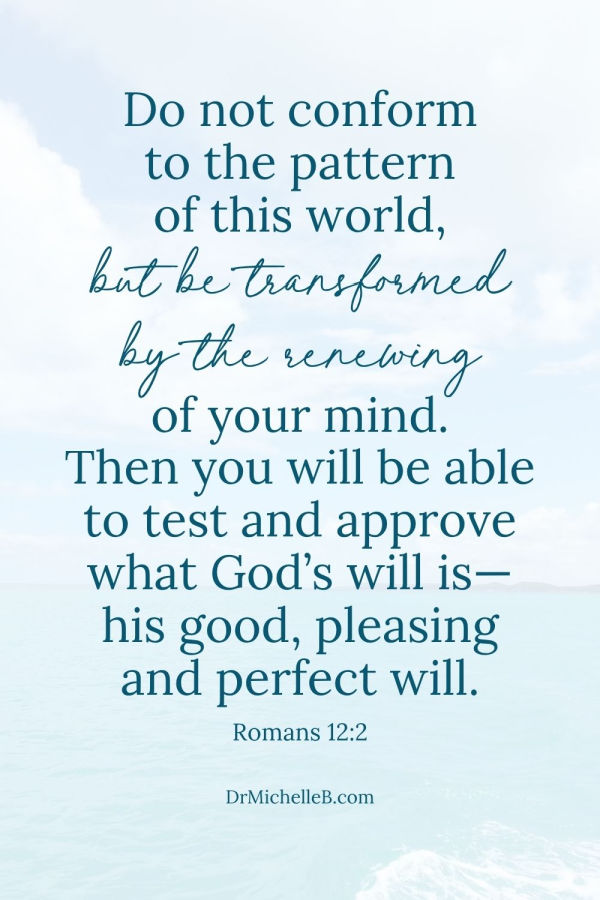
Romans 12:2 calls us to be transformed by the renewing of our minds. That doesn’t mean pretending that what happened didn’t happen. It means allowing God’s truth to reshape the way we understand what happened, what it means, and who we are because of it.
In How to Renew Your Mind: A Biblical Approach to Mental Health, I talk about the relationship between repeated thought patterns, neuroplasticity, and the biblical invitation to align our thinking with God’s truth. The brain is capable of change, and repeated patterns of thinking can become increasingly familiar. That means we aren’t necessarily destined to think the same thoughts or respond in the same ways forever.
But renewing the mind isn’t simply replacing a negative thought with a positive one.
Sometimes it means replacing a lie with truth.
I am unlovable becomes I am loved by God.
I can’t trust anyone becomes I can learn to recognize safe people and establish wise boundaries.
What happened to me defines me becomes What happened to me is part of my story, but it does not determine my identity.
I’ll never be okay again becomes I don’t know exactly what the future holds, but I don’t have to face it alone.
That’s not denial.
That’s transformation and the start of renewal.
What Does Healthy Emotional Processing Look Like?
Healthy emotional processing isn’t endlessly analyzing the past. It’s also not pretending the past doesn’t matter.
Processing can involve acknowledging an experience, recognizing the emotions connected to it, making meaning of what happened, and gradually integrating the experience into the larger story of your life.
Sometimes that requires talking with someone safe.
Sometimes it involves prayer.
Sometimes it involves grieving.
Sometimes it means challenging a belief that developed because of what happened.
Sometimes it means establishing a boundary.
Sometimes it means learning a new response when an old trigger appears.
And sometimes, particularly when trauma is involved, it means working with a trained professional who understands how traumatic experiences affect both the brain and the nervous system.
There isn’t one formula for healing because there isn’t one formula for human beings.
What matters is that we move beyond simply carrying the emotional weight and toward processing what we’ve experienced in a way that allows us to live more fully in the present.
What Does Faith Have to Do with Letting Go?
For those of us who follow Christ, emotional healing doesn’t happen in isolation from our faith. Scripture doesn’t ask us to pretend that painful things don’t hurt. The Bible is filled with people who experienced grief, betrayal, rejection, fear, anger, disappointment, and loss. They didn’t have to sanitize their emotions before bringing them to God.
The Psalms, in particular, give us permission to tell God the truth about what hurts.
And Scripture also reminds us that we don’t have to remain where pain has left us.
Isaiah 43:18-19 tells us not to dwell on former things because God is doing something new. That doesn’t mean our memories disappear or our history no longer matters. It means our past does not have to determine the limits of what God can do in our future.
Paul writes in Philippians 3:13-14 about forgetting what lies behind and pressing forward toward what lies ahead. That’s not a command to develop amnesia. It’s an invitation to stop allowing what is behind us to dictate the direction in which we are going.
There is a difference between remembering where you’ve been and continually turning around to live there.

Forgiveness Doesn’t Require You to Pretend You Weren’t Hurt
This is particularly important when the thing we’re trying to release involves another person.
Sometimes Christians hear the word forgiveness and assume it means they have to stop feeling hurt, forget what happened, trust the person again, or restore the relationship to exactly what it was before.
That’s not what forgiveness requires.
Forgiveness can involve releasing the debt we believe another person owes us to God while still acknowledging that the offense was real and that boundaries may be necessary. As I wrote in When You Don’t Feel Like Forgiving, forgiveness isn’t about pretending the hurt didn’t happen or waiting until you feel differently. Sometimes our minds and emotions need time to catch up with a decision we’ve made in obedience to God.
That matters because healing isn’t always a straight line.
You may believe you’ve forgiven someone and then discover that an unexpected memory brings the hurt back to the surface. That doesn’t necessarily mean you have to start all over. It may simply mean there is another layer that needs attention.
Healing can happen in layers.
You Don’t Have to Be Afraid of Your Own Story
If something from your past still brings up emotion, I don’t want you to automatically conclude that you’ve failed to heal.
Instead, become curious.
What does this memory mean to you now?
What did you learn from it?
What does your brain seem to be trying to protect you from?
Is something happening in the present that genuinely requires your attention, or is your nervous system responding to an old association?
What would it look like to acknowledge what happened without allowing it to determine what happens next?
Those questions don’t erase the past.
They help you begin distinguishing the past from the present.
And that distinction can be powerful because the goal of healing isn’t to become someone who has never been hurt. It’s to become someone who can carry the truth of what happened without allowing the wound to dictate every step that comes afterward.
Your brain may remember. Your heart may still grieve. Your body may occasionally react.
And you can still move forward.
You can still grow.
You can still experience safety.
You can still trust again, perhaps more wisely.
You can still love.
You can still laugh.
You can still hope.
Maybe the thing you’ve been trying to release isn’t your memory at all. Maybe what you really want to release is the belief that because something happened to you once, it must always define you.
It doesn’t.
Your story is bigger than what hurt you.
And you don’t have to erase the chapters behind you to begin living the ones God is still writing.
If something from your past came to mind while you were reading this, be gentle with yourself today. You don’t need to force it away, and you don’t need to solve it before you go to bed tonight. Maybe simply acknowledge it. Bring it honestly before God. Talk with someone you trust if you need support. Give yourself permission to take the next healthy step rather than demanding that you complete the entire journey at once.
And if you’re somewhere in that process right now, I want you to know that I’m glad you’re here. I know these conversations can touch places in our hearts that we don’t always know how to explain to anyone else. You don’t have to have the right words, and you don’t have to have everything figured out before you bring your story into the light.
Whatever you’re carrying today, I hope you’ll remember that you don’t have to carry it alone. There is room for your questions, your grief, your healing, and even the parts of your story that still don’t make sense. And there is still room for hope.
I’m honored to walk alongside you here, one conversation at a time.
(If there are affiliate links in this post, meaning, if you click through and make a purchase, I may receive a commission (at no extra cost to you)).
If you’d like support as you continue processing what you’ve carried, a few books may be helpful companions along the way. Consider Emotional Hoarding: Letting Go of the Stuff that Keeps You Stuck by Laurie Davies, Emotionally Healthy Spirituality by Peter Scazzero, and Clutter Free by Kathi Lipp for additional encouragement and practical insight.
Because of Him, Hope Prevails!
Dr. Michelle
Why can something you thought you moved past suddenly bring old emotions rushing back? Learn why your brain holds on and how faith and mind renewal can help you heal. Share on X Remembering doesn’t mean you haven’t healed. Learn why your brain may replay the past and how emotional processing can help you move forward without reliving the pain. Share on X
Get your Free Stress-Response Personality Assessment
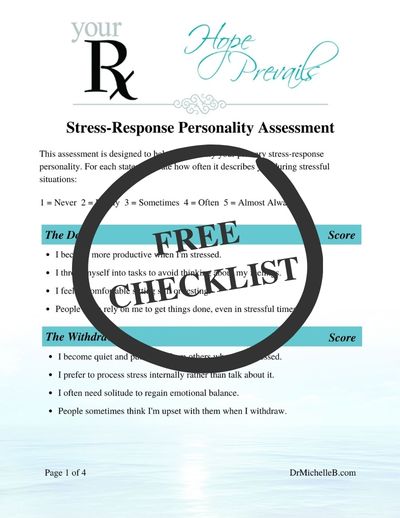
Stress rarely affects everyone the same way. Your brain, body, and emotions often respond in unique patterns shaped by your personality, past experiences, and nervous system.
This assessment will help you identify your primary stress-response personality so you can better understand how you react under pressure, recognize your stress patterns, and begin moving toward healthier, faith-filled responses.
Get the assessment here: Stress-Response Personality Assessment


Thank you for this! Your articles that you have shared this year have been a blessing and often a lifeline! Very often they have been just what I and my family needed to hear or be reminded of in the moment.
Amaris,
Thank you so much for taking the time to encourage me with your gracious words. I appreciate it so much. Hopefully the future posts will continue to meet you right where you are. Feel free to share the emails with others.
Hope Prevails,
Dr. Michelle